Alexandre Yersin was a Swiss-French physician and bacteriologist who identified the bacterium that causes plague. He arrived in Nha Trang in 1891 and spent nearly all of the rest of his life here until his death in 1943.
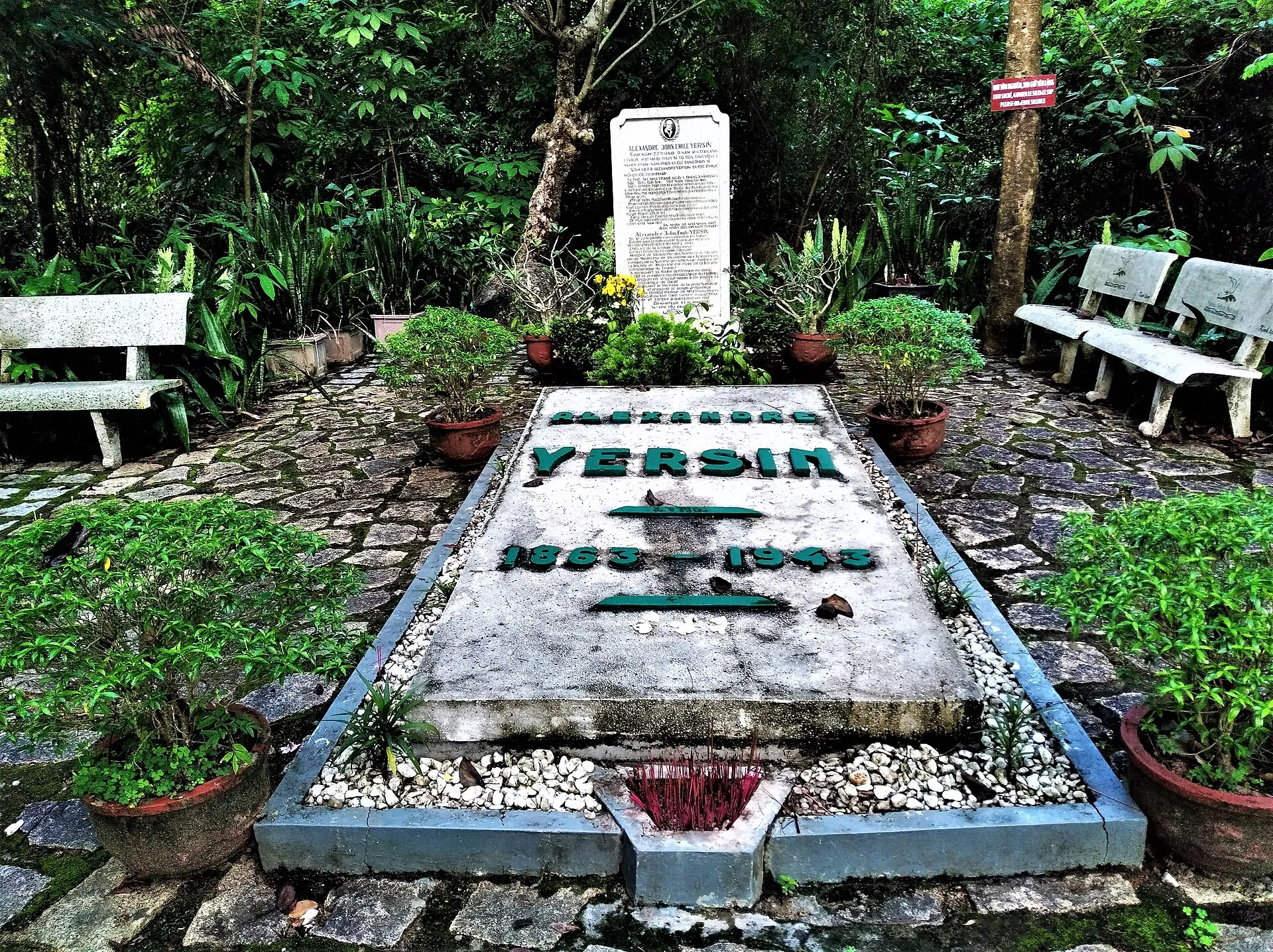
His tomb stands on a low hill at Suoi Dau, some 20 km south of Nha Trang, on land that was once his farm and research station. The grave itself is plain and low, surrounded by trees and stone benches.
Local people still call him Mr Nam and come here to burn incense. It is one of very few places in Vietnam where a foreigner is remembered through local devotional practice — which says a good deal about what Yersin meant to this stretch of coast.
The reasons for that attachment are concrete: beyond the laboratory work, Yersin introduced rubber and cinchona to the region, set up a meteorological station, and treated the people around him for years without charging.
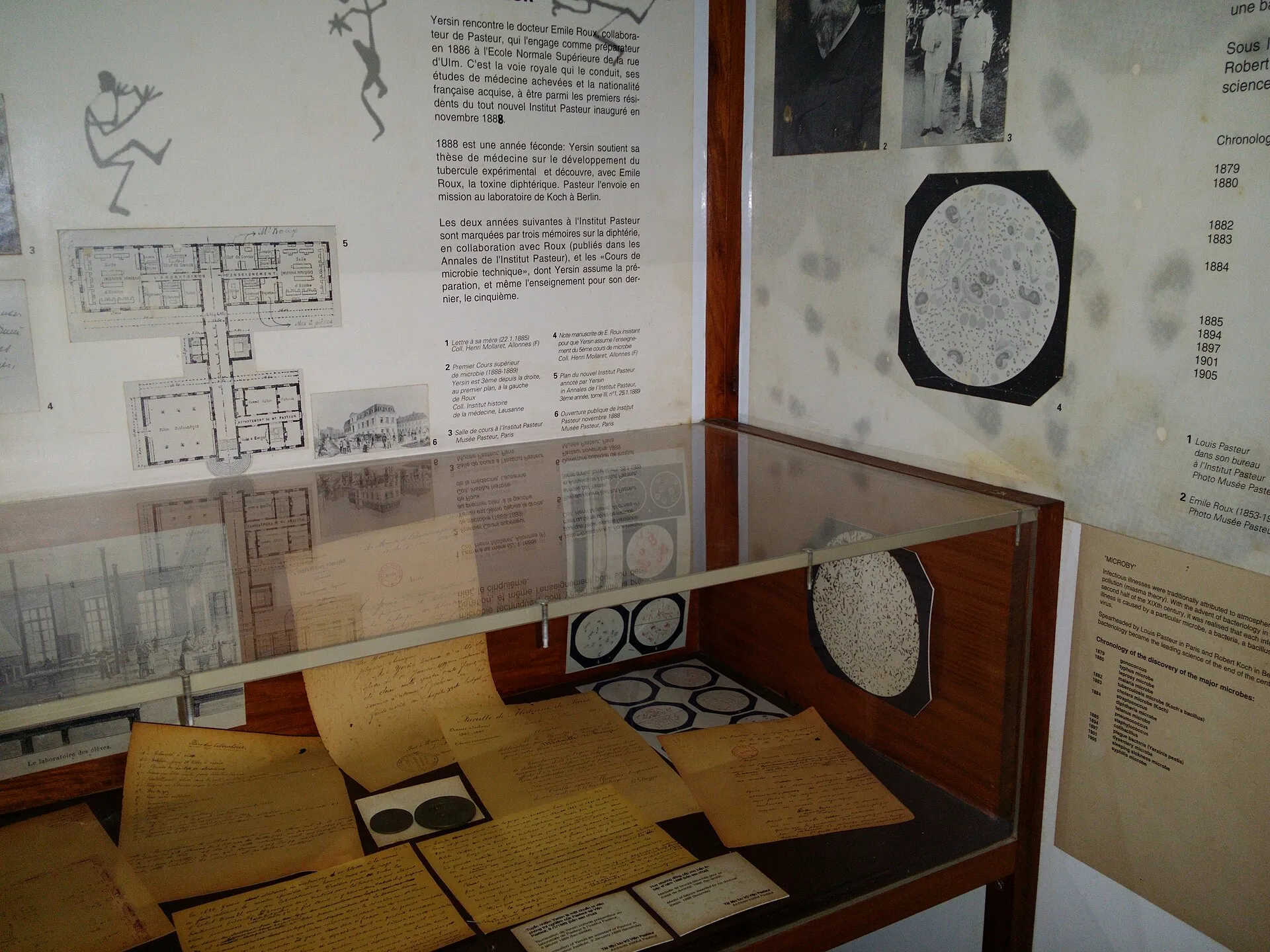
Suoi Dau is reached on the highway south, about thirty minutes by road. It is quiet and little visited, with no facilities beyond somewhere to park. Half an hour is enough. Paired with the Yersin Museum in the city it gives you the whole story, though the distance between them means planning rather than improvising.